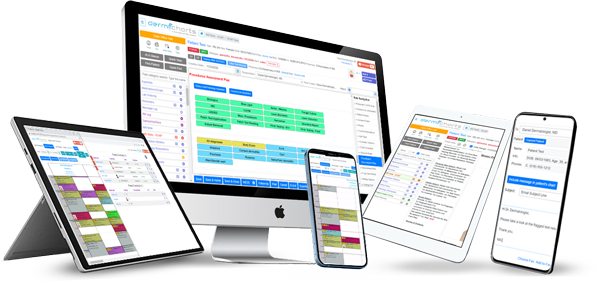
Why General EHRs Can’t Keep Up With Dermatology
Dermatology is one of the few specialties that combines visual diagnosis, procedural work, and longitudinal tracking across hundreds of skin conditions, often in under 10 minutes per patient. Most systems labeled as general EHR for dermatology platforms weren’t built with that in mind.
Dermatologists aren’t just entering vitals and prescribing medications. They’re mapping lesions, tracking cosmetic outcomes, reviewing pathology reports, and juggling complex coding, all while maintaining patient trust in a highly visual specialty.
Specialty Software Isn’t a Luxury—It’s a Clinical Advantage
The right dermatology EHR software doesn’t just reduce clicks. It reshapes how a practice functions, from decision-making to documentation flow. With MD Charts, this looks like:
- Streamlined workflows for scheduling, documentation, and billing
- Automated coding suggestions minimize errors and accelerate reimbursements
- Optimized dermatology revenue cycle management, ensuring steady cash flow
When Systems Match Clinical Thinking, Outcomes Improve
Clinical software should never force providers to think like the system. Instead, the system should model the way clinicians think. In dermatology, that means:
- Pre-configured dermatology-specific EHR templates simplify documentation
- Automated data entry ensures fluid, responsive charting
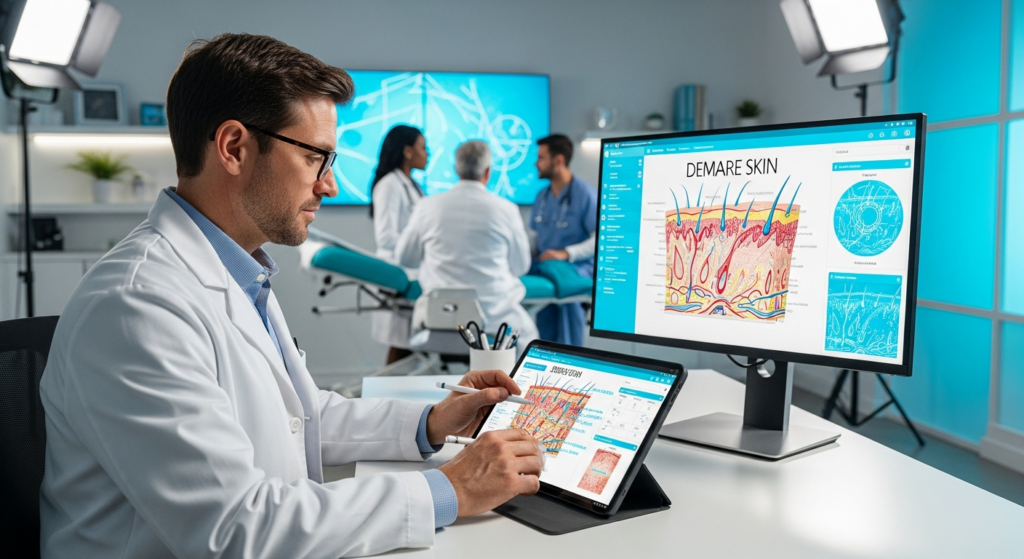
- Visual charting tools to create a clinical narrative that supports real-time insight
Time is Money! The Cost of Working Around the Wrong Tools
Every extra minute spent hunting for the right code, toggling between screens, or rewriting documentation adds up, not just in lost time, but in lost focus.
With the right EHR for dermatology that is built specifically for the dermatology industry, practitioners can enjoy:
- Secure messaging enables instant communication with staff and providers
- Integrated lab and imaging connectivity eliminates manual data entry
- Collaborative tools reduce delays in patient care
Dermatology EHR Systems Are A Smarter Path To Financial Stability
Dermatology EHR systems don’t just support clinical efficiency, they’re essential to financial resilience.
Supporting Practice Growth Without the Growing Pains
Scalability is no longer “nice to have.” As your patient volume increases or you add new services, your dermatology EHR software should flex to meet demand, without punishing you with steep add-on fees.
Prepping for the Unpredictable: Recession-Proof Dermatology Practices
Economic uncertainty hits private practices hard. With access to real-time performance data and streamlined billing, dermatologists can make smarter decisions, faster.
- EHR data insights provide real-time analytics to help dermatologists make informed financial decisions
- Better resource allocation allows practices to identify areas where costs can be minimized
- Scalable features provide flexibility without requiring a large upfront investment
The Hidden Costs Most EHR Buyers Overlook
Implementing an EHR for dermatology involves more than just the initial software purchase. It’s about infrastructure, training, and transition.
Cost Considerations for Dermatologists
- Customization and Configuration: Assess whether additional fees are involved in designing the EHR to suit your practice’s specific needs
- Training and Support: Adequate training and ongoing technical support are crucial for a seamless transition
- Data Migration: Understand the costs involved in ensuring a smooth data transfer and compatibility with your new EHR system